Skip to content

Topics: Environment, Energy

  • Solar energy becomes biofuel without solar cells

    Soon we will be able to replace fossil fuels with a carbon-neutral product created from solar energy, carbon dioxide and water. Researchers at Uppsala University have successfully produced microorganisms that can efficiently produce the alcohol butanol using carbon dioxide and solar energy, without needing to use solar cells. The results have been published in Energy & Environmental Science.
  • Association between high blood PCB levels and premature death

    High levels of polychlorinated biphenyls (PCBs) in the blood are associated with premature death. This is shown by a cross-disciplinary study, based on 1,000 randomly selected 70-year-olds in Uppsala, that is published in the JAMA Network Open journal today.

  • Artificial enzymes convert solar energy into hydrogen gas

    In a new scientific article, researchers at Uppsala University describe how, using a completely new method, they have synthesised an artificial enzyme that functions in the metabolism of living cells. These enzymes can utilise the cell’s own energy, and thereby enable hydrogen gas to be produced from solar energy.

  • ​Magma storage and eruptive behaviour at Bali volcano

    A new study by researchers at Uppsala University and INGV, Italy, sheds light on magma storage under the currently active Agung volcano on the island of Bali in Indonesia. Magma at Agung is stored at both mantle (~20 km) and shallow crustal (~5 km) depths, which may be a potential cause for sudden pressure-driven eruptions in this densely populated part of the world. (Scientific Reports 180712)

  • Scottish badgers highlight the complexity of species responses to environmental change

    In a new study researchers have found that although warmer weather should benefit badger populations, the predicted human population increase in the Scottish highlands is likely to disturb badgers and counteract that effect. These results emphasise the importance of interactive effects and context-dependent responses when planning conservation management under human-induced environmental change.

  • Synthetic chemistry and biology in new method for more efficient hydrogen gas production

    Hydrogen gas has long been proposed as a promising energy carrier for future energy applications, but generating the gas from water has proved inefficient. In an article in the journal Energy and Environmental Science, scientists at Uppsala University now present an alternative, interdisciplinary method based on principles from nature.

  • Genes key to killer bee’s success

    In a new study, researchers from Uppsala University sequenced the genomes of Africanized bees that have invaded large parts of the world to find out what makes them so extraordinarily successful. One particular region in the genome caught the researchers’ attention and the genes found there could be part of the explanation for the aggressive advances of these hybrid bees.

  • The genetic basis for timing of reproduction in the Atlantic herring revealed

    In a study published today in PNAS, scientists in Sweden and Canada have studied the genetic basis of reproduction in 25 populations of herring from both sides of the North Atlantic. They revealed a number of genes associated with the timing of reproduction, and the genetic variants associated with spring or autumn spawning were found to be largely shared between geographically distant populations

  • Measurements by school pupils paved way for key research findings

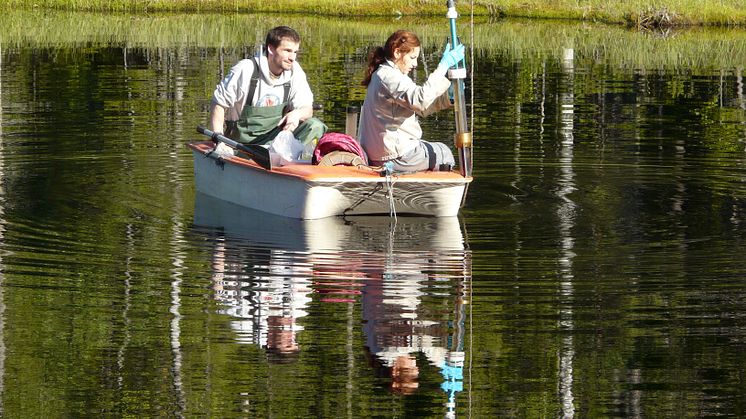
    With their measurements and samples, nearly 3,500 schoolchildren have assisted a research study on lakes and global warming, now published in the journal Scientific Reports. The results show that water temperatures generally remain low despite the air becoming warmer. This helps to curb the emission of greenhouse gases.

  • One in five residents overuses electricity at neighbours’ expense

    Household electricity use falls by more than 30% when residents are obliged to pay for their own personal consumption. This is shown in a new study by researchers at Uppsala University’s and the Research Institute of Industrial Economics (IFN), published in the Proceedings of the National Academy of Sciences of the USA (PNAS).

  • Archeologists at the vanguard of environmental research

    The history of people and landscapes, whether natural or cultural, is fundamentally connected. Answering key historical questions about this relation will allow us to approach our most important environmental issues in novel ways. Today in the open access journal PLOS ONE archeologists present a list of 50 priority issues for historical ecology.

  • The secret of the supervolcano

    Researchers have now found an explanation for what triggered the largest volcanic eruption witnessed by humankind. The volcano’s secret was revealed by geochemical clues hidden inside volcanic quartz crystals.

  • Climate change altered the natural selection – large forehead patch no longer a winner

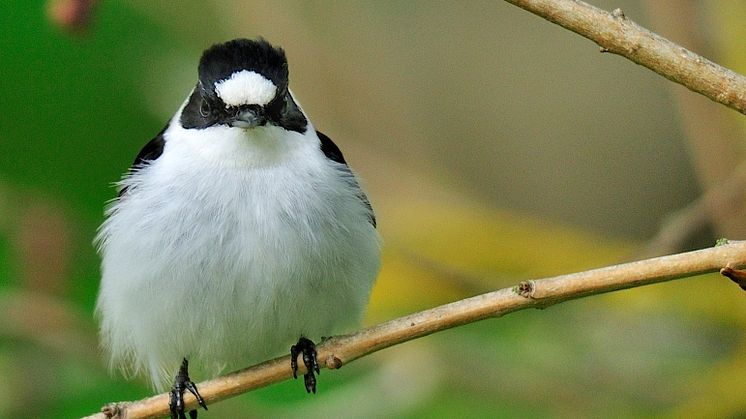
    In a new study, researchers at Uppsala University have found evidence of that climate change upends selection of face characteristics in the collared flycatcher. During the study the annual fitness selection on forehead patch size switched from positive to negative, a reversal that is accounted for by rising spring temperatures at the breeding site.

  • Studies of one of the world’s rarest birds, the Rufous-headed Robin

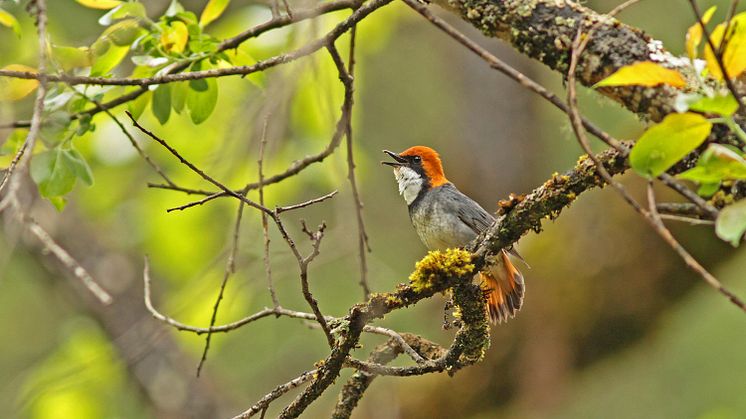
    Researchers at the Chinese Academy of Sciences in Beijing and Uppsala University, Uppsala, Sweden have put together all known information about the endangered Rufous-headed Robin. Very few observations have been made since it was first discovered in 1905. The researchers suggest that its distribution might be larger than previously thought.

  • Watching how plants make oxygen

    In a new study, an international team of researchers made significant progress in visualizing the process how plants split water to produce oxygen. The results are published in Nature.

  • ​Cooperation profitable for sailfish

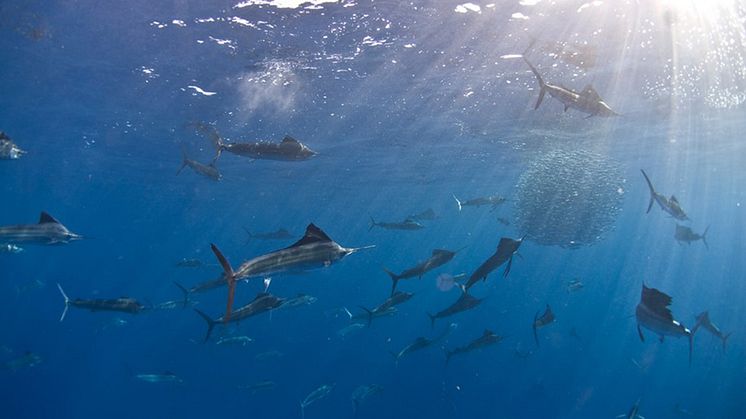
    Cooperating sailfish catch more fish per time than if they hunt individually, a new study from Uppsala University, published in the scientific journal Proceedings of the Royal Society B has shown.

  • The psychology behind climate change denial

    In a new thesis in psychology, Kirsti Jylhä at Uppsala University has studied the psychology behind climate change denial. The results show that individuals who accept hierarchical power structures tend to a larger extent deny the problem. The papers in the thesis are published in the scientific journal Personality and Individual Differences.

Show more