Skip to content

Topics: Environment

  • Stacy VanDeveer new Zennström Professor of Climate Change Leadership

    Stacy VanDeveer, professor in Global Governance and Human Security at the University of Massachusetts Boston becomes visiting professor in Climate Change Leadership at Uppsala University. The ten-years series of visiting professorships is financed by a previous donation to Uppsala University by alumnus Niklas Zennström and Catherine Zennström through their foundation Zennström Philanthropies.

  • Old World flycatchers’ family tree mapped

    The European robin’s closest relatives are found in tropical Africa. The European robin is therefore not closely related to the Japanese robin, despite their close similarity in appearance. This is confirmed by a new study of the Old World flycatcher family, to which these birds belong. The study comprises 92 per cent of the more than 300 species in this family.

  • Sverker Jagers new Zennström Professor of Climate Change Leadership

    Sverker C Jagers, Professor of Political Science and Director of the Centre for Collective Action Research at the University of Gothenburg, will hold Uppsala University's fifth Zennström Visiting Professorship in Climate Change Leadership. The ten-year visiting professorship, through which a new professor is invited every year or every other year, is funded by an earlier donation to Uppsala Univ

  • Ancestral genetic variation essential for rapid evolution of Darwin’s finches

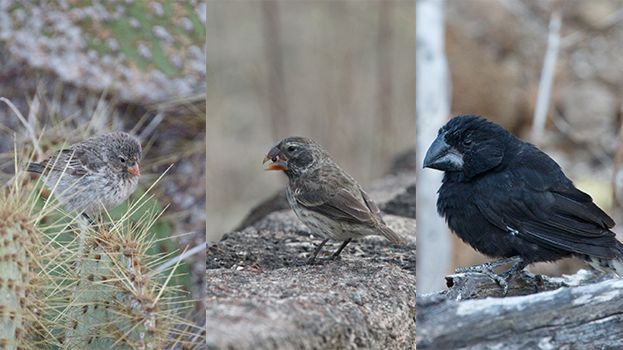
    In a study an international team of researchers have identified 28 gene regions that have been particularly important in the evolution of Darwin’s finches. These genetic variants do not represent recent mutations but constitute ancestral genetic variation that has accumulated over time as different species of Darwin’s finches have evolved with striking differences in beak morphology.

  • Climate resilient microalgae could help restore coral reefs

    Coral species exhibit different temperature tolerances. This is in part due to the composition of their microalgae symbionts. With a new method, researchers from Uppsala University were able to predict how individual microalgae might behave under future temperature stress and identify more tolerant coral symbionts. In combination with forthcoming single cell selection and growth experiments, the

  • Epigenetic mechanism can explain how chemicals in plastic may cause lower IQ levels in children

    The chemical bisphenol F can induce changes in a gene that is vital for neurological development. This discovery was made by researchers at the universities of Uppsala and Karlstad, Sweden. The mechanism could explain why exposure to this chemical during the fetal stage may be connected with a lower IQ at seven years of age – an association previously seen by the same research group.

  • ​Multigenerational effects of environmental toxins

    The effects of the endocrine disruptor linuron on frogs are not limited to those exposed, but are passed on to their offspring (reduced body weight and decreased fertility) and grand-offspring (increased body weight and a disrupted metabolism). This is demonstrated by a new study (Uppsala University and Stockholm University), published in the journal Science of the Total Environment.

  • Producing more sustainable hydrogen with composite polymer dots

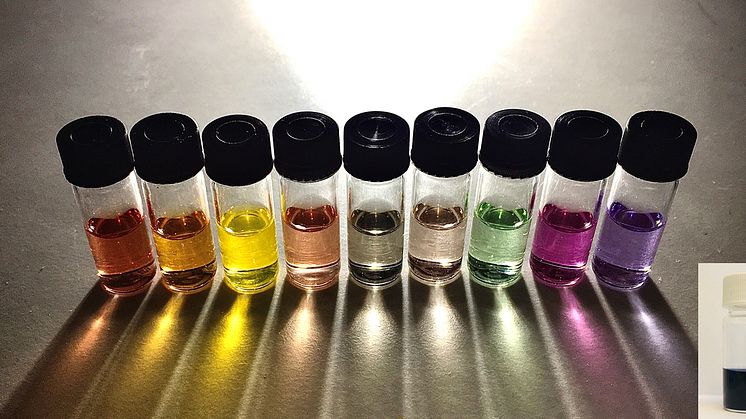
    Hydrogen for energy use can be extracted in an environmentally friendly way from water and sunlight, using photocatalytic composite polymer nanoparticles developed by researchers at Uppsala University. In laboratory tests, these “polymer dots” showed promising performance and stability alike. The study has been published in the Journal of the American Chemical Society.

  • Warmer climate may make new mutations more harmful

    A warmer global climate can cause mutations to have more severe consequences for the health of organisms through their detrimental effect on protein function. This may have major repercussions on organisms’ ability to adapt to, and survive in, the altered habitats of the future. This is shown in a new Uppsala University research study.

  • European eels – one gene pool fits all

    European eels spend most of their adult life in a range of fresh- and brackish waters, across Europe and Northern Africa. Using whole-genome analysis, a new study finds that all European eels belong to a single panmictic population, an extraordinary finding for a species living under such variable environmental conditions. The study is published in PNAS.

  • Genome sequencing paves the way for more sustainable herring fishery

    An international team of Swedish, Norwegian, Danish and Irish scientists has used whole genome sequencing to characterise 53 herring populations from the Atlantic Ocean and the Baltic Sea. They have developed genetic markers that make it possible to better monitor herring populations and avoid overfishing. The study is published in the journal eLife.

  • New semiconductor coating may pave way for future green fuels

    Hydrogen gas and methanol for fuel cells or as raw materials for the chemicals industry, for example, could be produced more sustainably using sunlight, a new Uppsala University study shows. In this study, researchers have developed a new coating material for semiconductors that may create new opportunities to produce fuels in processes that combine direct sunlight with electricity.

  • Invisible fungi revealed by their genetic material

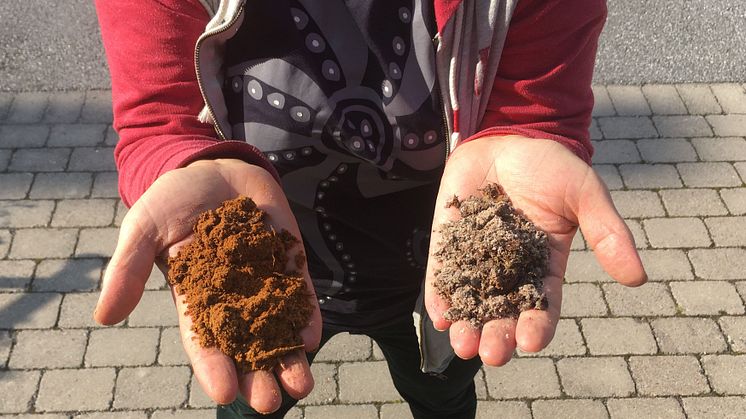
    How can new life forms that we cannot see be discovered? Using a novel method based on looking for DNA in soil samples, researchers at Uppsala University have revealed the existence of two hitherto unknown, but very common fungus species. They are thought to perform a key function in the ecosystem, but their exact role remains to be clarified. The study is published in the journal IMA Fungus.

  • BATTERY 2030+ – large-scale European initiative for battery research starts up

    The European research initiative BATTERY 2030+ is now getting going. The ambition is to make Europe a world-leader in the development and production of the batteries of the future. These batteries need to store more energy, have a longer life, and be safer and more environmentally friendly than today’s batteries in order to facilitate the transition to a more climate-neutral society.

  • Ancient enzymes can contribute to greener chemistry

    A research team at Uppsala University has resurrected several billion-year-old enzymes and reprogrammed them to catalyse completely different chemical reactions than their modern versions can manage. The method can be used to develop sustainable solutions within biotechnology, such as for enzyme bioreactors or to chemically degrade environmental toxins.

  • An All-Organic Proton Battery Energised for Sustainable Energy Storage

    Sustainable energy storage is in great demand. Researchers at Uppsala University have therefore developed an all-organic proton battery that can be charged in a matter of seconds. The battery can be charged and discharged over 500 times without any significant loss of capacity. Their work has been published in the scientific journal Angewandte Chemie.

  • ​Fungal infection hinders frog’s mobility

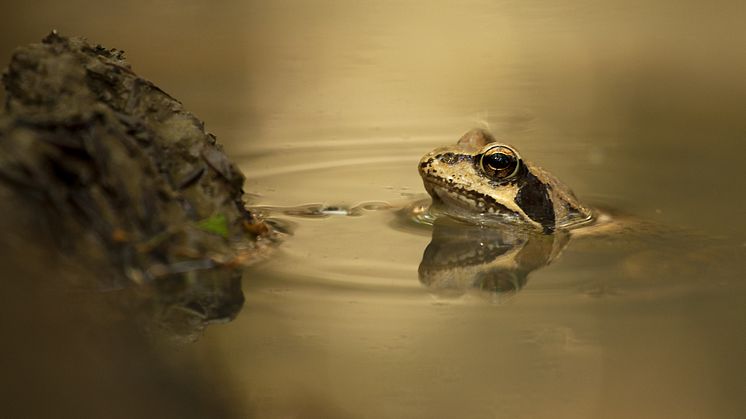
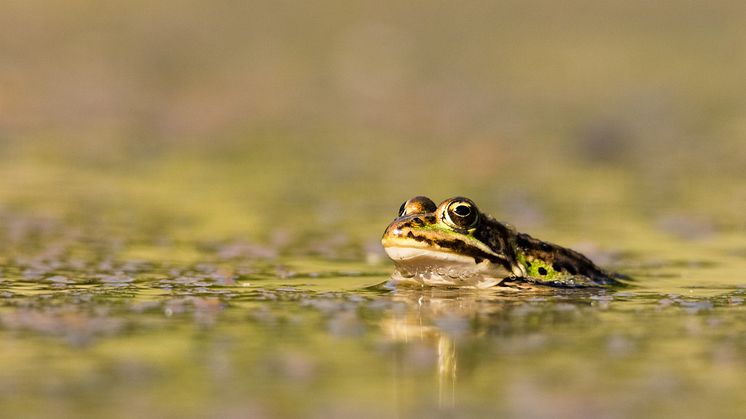
    Pool frogs infected with the parasitic chytrid fungus Batrachochytrium dendrobatidis range over shorter distances. This is the conclusion of a study conducted by researchers at Uppsala University and the Swedish University of Agricultural Sciences (SLU), who have investigated how the fungus affects the mobility of the red-listed pool frog along the Uppland coast.

  • Paper filter from local algae could save lives in Bangladesh

    ​The problem of access to safe drinking water in most parts of Bangladesh is a persistent challenge. Now, a team of scientists shows that a locally growing and previously unexploited green macroalgae species could be used to extract cellulose nanofibers, which can then be formed into paper sheets with tailored pore size that are utilized for point-of-use water treatment.

  • Association between high blood PCB levels and premature death

    High levels of polychlorinated biphenyls (PCBs) in the blood are associated with premature death. This is shown by a cross-disciplinary study, based on 1,000 randomly selected 70-year-olds in Uppsala, that is published in the JAMA Network Open journal today.

  • Measurements by school pupils paved way for key research findings

    With their measurements and samples, nearly 3,500 schoolchildren have assisted a research study on lakes and global warming, now published in the journal Scientific Reports. The results show that water temperatures generally remain low despite the air becoming warmer. This helps to curb the emission of greenhouse gases.

Show more