Magma movements foretell future eruptions
Geologists at Uppsala University have traced magma movement beneath Mt. Cameroon volcano, which will help monitoring for future volcanic eruptions. The results are published in Scientific Reports.
Geologists at Uppsala University have traced magma movement beneath Mt. Cameroon volcano, which will help monitoring for future volcanic eruptions. The results are published in Scientific Reports.
The one millimetre long roundworm Caenorhabditis elegans has been used as a model organism in scientific research, and has therefore been extensively examined. A research group at Uppsala University has now demonstrated that the worm is an even more complete model system than previously thought, which could enable more detailed research into areas such as early embryonic development.
In the animal kingdom colourful traits can be both a blessing and a curse. A new study from a group of researchers at Uppsala University has studied the conspicuous wing coloration of two species of damselflies. Their results imply that males, but not females, pay a high cost when using colour to communicate with other damselflies, both in terms of predation risk and visibility to prey.
This week in Nature, an international team of researchers shows that fossils of the 360 million-year-old tetrapod Acanthostega, one of the iconic transitional forms between fishes and land animals, are not grown-ups but all juveniles. This conclusion sheds new light on the life cycle of Acanthostega and the so-called conquest of land by tetrapods.
A research team at Uppsala University has determined the complete genetic code of 11 members of a flycatcher pedigree. Doing this, they have for the first time been able to estimate the rate of new mutations in birds. When they combined the new results with mutation rate estimates from other organisms, a clear pattern emerged: The more common a species is, the lower its mutation rate.
Cell lines are cultured cells that are commonly used in medical research. New results from Uppsala University show that such cells are not always what they are assumed to be. Using genetic analyses, the researchers showed that a commonly used cell line which was established in Uppsala almost fifty years ago does not originate from the patient it is claimed to stem from.
In a new study researchers from Sweden and Italy show what happens when magma meets limestone on its way up to the surface. Magma-limestone interaction might help explain why volcanoes like Vesuvius in Italy and Merapi in Indonesia are particularly explosive and, moreover, it helps us to understand another source of natural carbon released to the atmosphere by volcanoes.
An isolated population of honeybees in South Africa, the Cape bees, has evolved a strategy to reproduce without males. A team of researchers at Uppsala University and in South Africa has sequenced the entire genomes of a sample of Cape bees and compared them with other populations of honeybees to find out the genetic mechanisms behind their asexual reproduction.
In a new study, published in Science, researchers from Uppsala University found that larval fish exposed to microplastic particles during development displayed changed behaviors and stunted growth which lead to greatly increased mortality rates. Larval perch that had access to microplastic particles only ate plastic and ignored their natural food source of free-swimming zooplankton.
Uppsala physicists have in an international collaboration developed a new method for creating laser pulses which are shorter, have much higher intensity and cover the THz frequency range better than current sources. The study is published today in the authoritative journal Nature Photonics and is of great importance to materials research.
Same-sex sexual behavior is common in animals but puzzles evolutionary biologists since it doesn’t carry the same obvious benefits as heterosexual courtship behavior that leads to mating and production of offspring. A study from Uppsala University sheds new light on the pervasiveness of same-sex sexual behavior in the animal kingdom.
In a world first study researchers have found that coral bleaching and death can have dramatic repercussions for how small reef fish learn about and avoid predators. The new results are published in the journal Proceedings of the Royal Society B.
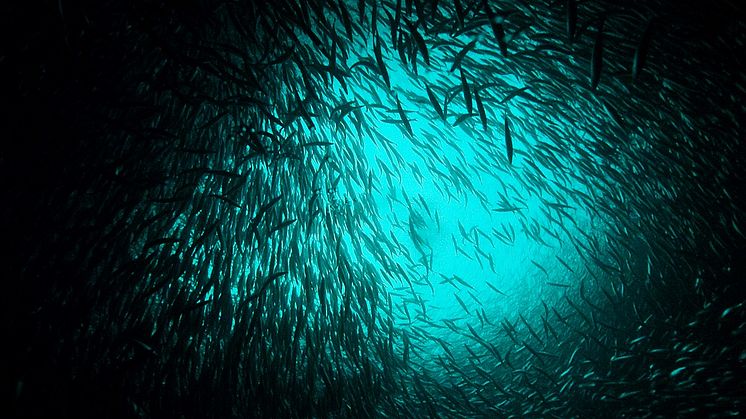
How species genetically adapt to their environment is a central question related to the evolution of biodiversity. In a new study scientists at Uppsala University and their colleagues report that whole genome sequencing of Atlantic and Baltic herring revealed hundreds of loci underlying adaptation to the brackish Baltic Sea or timing of reproduction. The study is published today in eLife.
One may expect a creature that darts around its habitat to be capable of perceiving rapid changes as well. Yet birds are famed more for their good visual acuity. Joint research by Uppsala University, Stockholm University and SLU now shows that, in small passerines (perching birds) in the wild, vision is considerably faster than in any other vertebrates .
A difference of one hundredth of a percent in fitness is sufficient to select between winners and losers in evolution. For the first time researchers have quantified the tiny selective forces that shape bacterial genomes. The story is published today in the prestigious journal PLoS Genetics.
Human communication is powered by rules for combining words to generate novel meanings. Such syntactical rules have long been assumed to be unique humans. A new study, published in Nature Communications, show that Japanese great tits combine their calls using specific rules to communicate important compound messages.
For the first time, researchers have succeeded in passing an antibody through the blood-brain barrier to act as a tracer for PET imaging of the brain. This resulted in more precise information being obtained than with regular radioactive tracers. The study provides hope for more effective diagnosis of early onset Alzheimer’s disease and improvements in monitoring the effects of medication.
Sometimes so-called synonymous mutations occur in DNA. These do not lead to a change in the protein sequence but which may still have major negative effects on the ability of bacteria to survive. New research from Uppsala University has now shown that an organism can efficiently compensate for the negative effects. These findings have been published in the journal Molecular Biology and Evolution.
They live several kilometers under the surface of the earth, need no light or oxygen and can only be seen in a microscope. By sequencing genomes of a newly discovered group of microbes, the Hadesarchaea, an international team of researchers have found out how these microorganisms make a living in the deep subsurface biosphere of our planet.
The human desire to master light has taken us from controlling fire to building global optical networks. But several questions still remain to be answered. At this year's Celsius-Linné lectures on February 18, top international researchers Professor Eli Yablonovitch and Professor Lene Vestergaard Hau will present pioneering ways to manage and manipulate light for use in countless areas.