Skip to content

Topics: Politics

  • World Cancer Day 2018: Better cancer care in focus at Uppsala Health Summit 2018

    Thanks to advances in treatment options, the chances of surviving cancer are better than ever before. However, cancer incidence is increasing and new forms of therapy are expensive. As a result, resource management and priority setting face major challenges. How can we ensure equitable access to diagnosis and treatment? This topic is the focus of Uppsala Health Summit 2018, “Care for Cancer”.
  • Report Uppsala Health Summit: 100 years after the Spanish flu – how can we protect ourselves against new epidemics?

    Warding off the threats of future epidemics will be difficult without better cooperation and contingency plans that allow us to act before a crisis hits. This is one message in a new report summarising the discussions of the Uppsala Health Summit on the theme of Tackling Infectious Disease Threats: Prevent, Detect and Respond with a One Health Approach, which took place in October last year.

  • Threats from infectious diseases on Uppsala Health Summit agenda

    At the Uppsala Health Summit Tackling Infectious Disease Threats, due to start next week, experts and decision makers from ministries, academia, companies and voluntary organisations are meeting to discuss how jointly to reduce the risk of severe outbreaks.

  • Infectious disease threats in focus at Uppsala Health Summit 2017

    Despite remarkable gains in health over the last century, infectious diseases remain a major threat. Alarming reports on outbreaks of Zika, Ebola or avian flu serve as reminders of the gravity of the situation. At the high-level meeting Uppsala Health Summit, international experts will gather from different sectors to discuss how to reduce the threats.

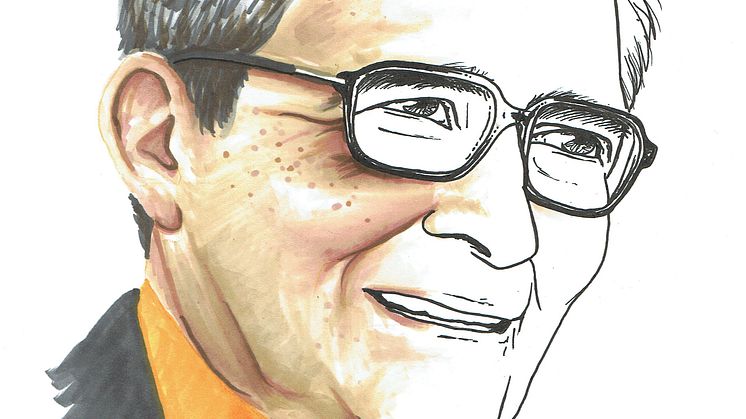
  • Amartya Sen awarded the 2017 Johan Skytte Prize in Political Science

    Amartya Sen awarded the 2017 Johan Skytte Prize in Political ScienceThe Johan Skytte Prize annually recognises the most valuable contribution to the field of Political Science. This year’s prize is awarded to Amartya Sen, Thomas W. Lamont Professor at Harvard University.

  • Childhood obesity on the agenda as experts gather in Uppsala

    At Uppsala Health Summit on childhood obesity, which starts today on World Obesity Day, experts from health organisations, the academic community, the business sector and non-governmental organisations meet to discuss how we can work together to combat the ongoing obesity epidemic.

  • Uppsala Health Summit 11-12 October: Pre-conference report

    A report has been released for the upcoming Uppsala Health Summit on ending childhood obesity, outlining the challenges, including the effectiveness of the much debated sugar-tax, how to target interventions for immigrants and the role of industry. The report is produced to prepare the 200 delegates for discussions on concrete solutions.

  • Uppsala University to invest in Antibiotics Centre

    ​An Uppsala Antibiotics Centre is to be created at Uppsala University. This was announced by Deputy Vice-Chancellor Anders Malmberg at today’s opening of the Uppsala Health Summit conference. The goal is for this interdisciplinary centre to be a regional, national and international knowledge resource and forum in the area of antibiotic resistance.

  • “Crimea Is Ours!” Russian geopolitics and digital irony

    In a new article published in the Journal of Eurasian Geography and Economics Mikhail Suslov, researcher at Uppsala University, analyzes how the annexation of Crimea in March 2014 has been represented and discussed on Russian-language social networks. The article discusses the paradox of ’digital disempowerment’ but also how no state can control digital irony.

  • Malaria testing yet to reach its potential

    In a study published this month in Malaria Journal, researchers from Uppsala University and other institutions present a new model for systematically evaluating new malaria treatment programs in routine conditions across multiple countries.

  • Uppsala Health Summit publishes pre-conference report

    For the upcoming Uppsala Health Summit on antibiotic resistance, 2–3 June, a report has now been published focusing on some of the most pressing issues and challenges. The aim of the meeting is to move the discussion forward, from the ‘what’ to the ‘who’ and ‘how’.

  • Understanding democracy and development traps using a data-driven approach

    Why do some countries seem to develop quickly while others remain poor? This question is at the heart of the so-called poverty or development trap problem. Using mathematics on open data sets researchers now present new insights into this issue, and also suggest which countries can be expected to develop faster. The paper is published in the open access journal Big Data.

  • Individual metropolises now global political players

    By providing the infrastructure that connects global flows and financial systems, major cities have increased their political power alongside the nation-states. In some cases, they are pursuing their own foreign policy in several areas. In her PhD thesis Kristin Ljungkvist, at Uppsala University, has studied the effects of this development and argues that certain risks should be heeded.

  • Press invitation: Uppsala Health Summit seeking smart solutions in ageing society

    Get set for 3-4 June: Uppsala University and seven other Swedish actors, has invited politicians, opinion-makers and experts from healthcare, academia and companies to an unconditional and open dialogue on the ways forward in an ageing society. The goal of the Uppsala Health Summit is to move from knowledge to action.

  • Local community group activities may help reduce neonatal mortality in Vietnam

    Community groups in rural Vietnam comprised of local health workers, politicians and laywomen (Maternal and Newborn Health Groups) set up to tackle challenges to maternal and neonatal health may reduce the neonatal death rate after three years and increase antenatal care attendance, according to a study by researchers from Sweden and Vietnam published in this week’s PLOS Medicine.