Skip to content

Topics: Politics

  • Hand-wringing characterised debate around begging

    It was the inability of both the political right and left to see and take responsibility for the systemic failures of the welfare society that led to the so-called “begging debate” in the early 2010s. This inability meant that they gave a free pass to the Sweden Democrats, who were alone able to formulate both the problem and their solution.These are some of the conclusions in a new monograph.

  • UCDP: Number of deaths in armed conflicts has doubled

    At least 237,000 people died in organised violence in 2022. A new report from UCDP at Uppsala University shows that this is a 97 per cent increase compared with the previous year, and the highest number since 1994. UCDP is the world’s main provider of data on organised violence. Its definition of armed conflict has become the global standard of how conflicts are systematically defined and studied

  • From living heritage to zombie churches

    Churches are preserved by an antiquarian system that risks killing them instead of keeping them alive. The Swedish State and the Church of Sweden therefore need to define new joint visions and goals to enable the ecclesiastical cultural heritage to be used and developed. This is shown by historian of art Henrik Lindblad in a new doctoral thesis from Uppsala University.

  • PRESS INVITATION: Inauguration of the Alva Myrdal Centre for Nuclear Disarmament

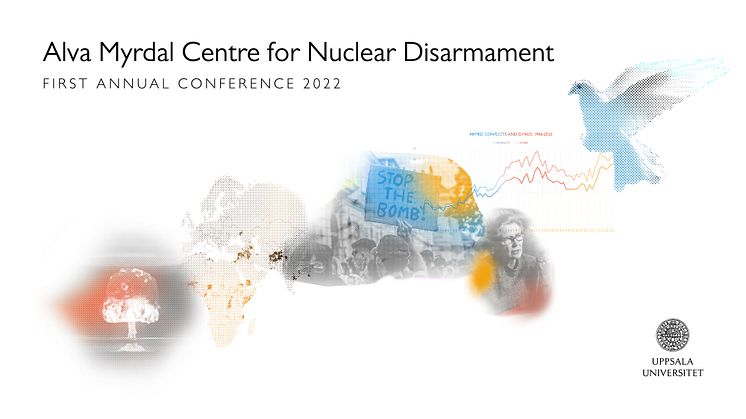
    Uppsala University is inaugurating the Alva Myrdal Centre for Nuclear Disarmament, a national centre for global knowledge on disarmament issues. UN Under-Secretary-General and High Representative for Disarmament Affairs Izumi Nakamitsu will address the inauguration ceremony remotely, while speakers attending the event include Beatrice Fihn, ICAN, recipient of the 2017 Nobel Peace Prize.

  • The vulnerability of surrogate mothers in a global market

    A new dissertation on surrogacy highlights Thai women's experiences of having acted as surrogate mothers. The dissertation shows the women's vulnerability in a global surrogacy industry, but also provides a more nuanced picture of what makes women seek surrogacy and how they relate to the process.

  • 400 years of political science in Uppsala

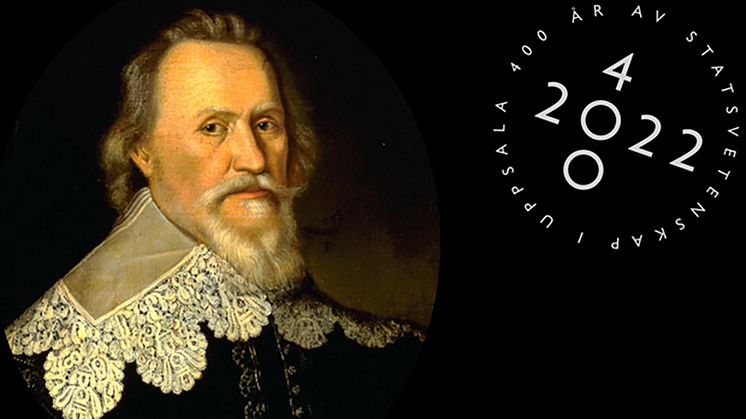
    It is 400 years since Johan Skytte founded a professorship in eloquence and political science. His intention was to strengthen the state administration that Sweden needed to maintain its position as a European great power. The Johan Skytte Professorship is the oldest active chair in political science in the world. To mark the 400th anniversary, lecture and panel debate will be held 1 October.

  • Municipal housing policy influences refugee reception

    Municipalities can use their local housing policy to influence the intake of refugees and the extent to which refugees are able to settle in the municipality in the long term. While certain municipalities offer refugees permanent housing contracts, others only provide temporary contracts that make it difficult for individuals to stay and establish themselves in the municipality.

  • Press invitation: Dag Hammarskjöld Lecture with Christiana Figueres and Agnès Callamard

    On 17 September 2021, the annual Dag Hammarskjöld Lecture will take place at Uppsala University’s Aula Magna. This year’s event features both the 2021 Lecture by Dr. Agnès Callamard, Secretary General of Amnesty International, and the 2019 Lecture by Christiana Figueres, chief architect of the 2015 Paris Agreement on Climate Change, which was previously postposed. Journalists and representatives o

  • ​Consensus and continuity determine Swedish foreign policy

    The Swedish Government was able to undertake and justify Swedish military involvement in Afghanistan 2002–2014 by describing it as a traditional Swedish contribution while differentiating it from American military operations in the region. Both consensus and a sense of continuity in foreign policy formulation are required to achieve broad support, finds a new dissertation from Uppsala University.

  • Married in Sweden – but single in another EU Member State?

    A same-sex marriage entered into in one EU Member State may not be recognised in another. The argument is often that such a marriage is too different from the country’s own laws and policies. In a new dissertation on private international law, Laima Vaige analyses how this application of the law compares with the European Convention on Human Rights and EU law.

  • New Centre for Nuclear Disarmament for Uppsala University

    Today, the Swedish Government decided to assign to Uppsala University the task of setting up a new national knowledge centre for research on nuclear disarmament. With an interdisciplinary approach and researchers in fields including peace and conflict research and nuclear physics, the incipient Alva Myrdal Centre will conduct research with the goal of contributing to a safer world for humankind.

  • Lowest level of fatalities in organised violence in seven years

    New data from the Uppsala Conflict Data Program (UCDP), Uppsala University shows that in 2018 the number of fatalities in organised violence reached the lowest level in seven years. However, the large share of internationalised conflicts, to which external states contribute troops, worries researchers. These conflicts tend to be both bloodier and longer.

  • ​First public forecasts from ViEWS, a political Violence Early-Warning System

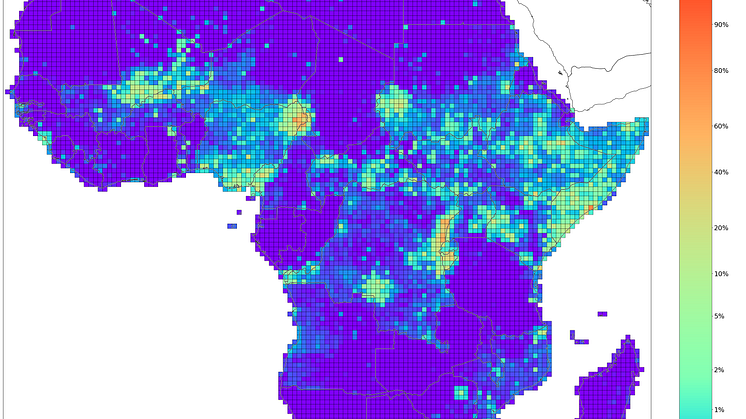
    The challenges of preventing, mitigating, and adapting to largescale political violence are daunting, particularly when violence escalates where it is not expected. With funding from the European Research Council, ViEWS: a political Violence Early-Warning System is developing a system that is rigorous, data-based, and publicly available to researchers and the international community.

  • World Cancer Day 2018: Better cancer care in focus at Uppsala Health Summit 2018

    Thanks to advances in treatment options, the chances of surviving cancer are better than ever before. However, cancer incidence is increasing and new forms of therapy are expensive. As a result, resource management and priority setting face major challenges. How can we ensure equitable access to diagnosis and treatment? This topic is the focus of Uppsala Health Summit 2018, “Care for Cancer”.

  • Report Uppsala Health Summit: 100 years after the Spanish flu – how can we protect ourselves against new epidemics?

    Warding off the threats of future epidemics will be difficult without better cooperation and contingency plans that allow us to act before a crisis hits. This is one message in a new report summarising the discussions of the Uppsala Health Summit on the theme of Tackling Infectious Disease Threats: Prevent, Detect and Respond with a One Health Approach, which took place in October last year.

  • Threats from infectious diseases on Uppsala Health Summit agenda

    At the Uppsala Health Summit Tackling Infectious Disease Threats, due to start next week, experts and decision makers from ministries, academia, companies and voluntary organisations are meeting to discuss how jointly to reduce the risk of severe outbreaks.

  • Infectious disease threats in focus at Uppsala Health Summit 2017

    Despite remarkable gains in health over the last century, infectious diseases remain a major threat. Alarming reports on outbreaks of Zika, Ebola or avian flu serve as reminders of the gravity of the situation. At the high-level meeting Uppsala Health Summit, international experts will gather from different sectors to discuss how to reduce the threats.

  • Amartya Sen awarded the 2017 Johan Skytte Prize in Political Science

    Amartya Sen awarded the 2017 Johan Skytte Prize in Political ScienceThe Johan Skytte Prize annually recognises the most valuable contribution to the field of Political Science. This year’s prize is awarded to Amartya Sen, Thomas W. Lamont Professor at Harvard University.

  • Childhood obesity on the agenda as experts gather in Uppsala

    At Uppsala Health Summit on childhood obesity, which starts today on World Obesity Day, experts from health organisations, the academic community, the business sector and non-governmental organisations meet to discuss how we can work together to combat the ongoing obesity epidemic.

Show more