Press release —
PMDD symptoms not universally the same
Premenstrual dysphoric disorder (PMDD) is a common mood disorder associated with the menstrual cycle. A new study published in Nature Communications shows that PMDD does not follow any universal pattern, and that there are three subtypes with different patterns of symptoms. The hope is that this discovery will lead to more individualised treatment.
Premenstrual dysphoric disorder is a more severe form of premenstrual syndrome (PMS) which affects women in their childbearing years. What distinguishes PMDD from other mood disorders is its link to the menstrual cycle, where symptoms can start shortly after ovulation and continue until the onset of menstruation.
The study involved 90 women with PMDD, and 40 healthy controls. They kept a diary for two months and reported what symptoms they felt and their severity. The women were asked to rate their levels of anxiety, depression, irritability, and mood swings.
Three different subtypes of PMDD identified
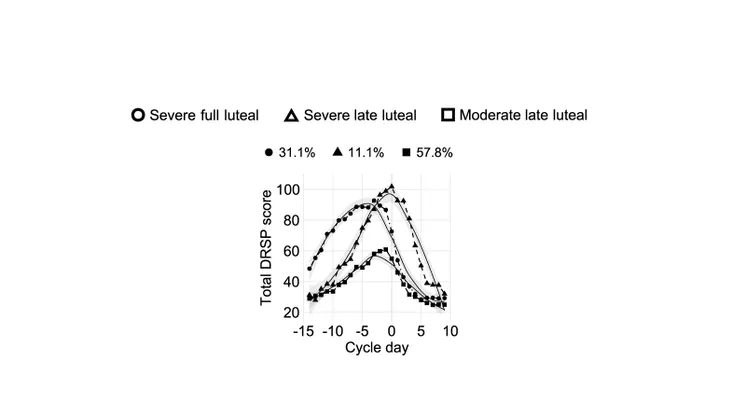
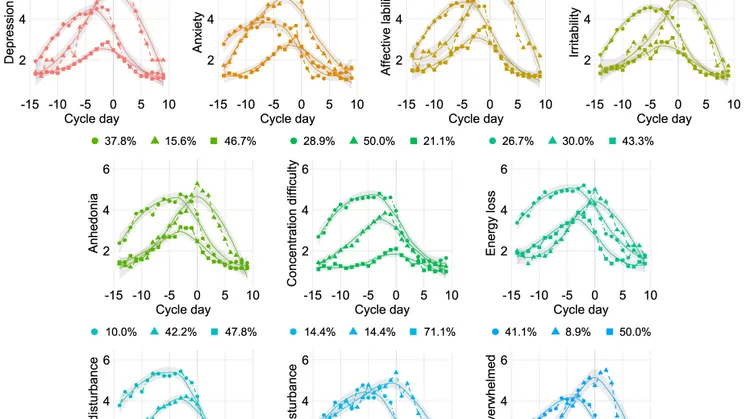
Using advanced statistical methods, the researchers were then able to study when different symptoms emerged and when they subsided in the menstrual cycle, and also to see how changes in one symptom affected other symptoms. Based on the women’s responses, the researchers were able to identify three different subtypes of PMDD.
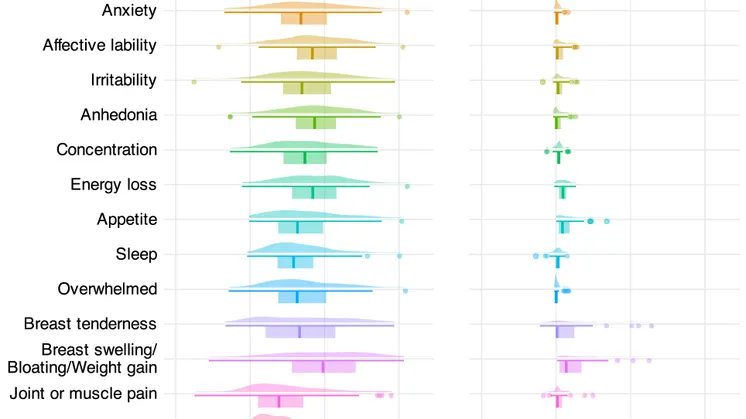
“Our results show that PMDD does not look the same for everyone. Even if two people have the same diagnosis, their symptoms can start at different points in the menstrual cycle and differ in how severe they become and in their offset. We also saw that in the same individual, different symptoms can follow different patterns. The hope is that our results will lead to a more nuanced understanding of PMDD, and in the long run lead to more individualised ways of monitoring and treating the condition,” says Erika Comasco, who led the study and is a professor of Molecular Psychiatry at Uppsala University.
The three different subtypes that the researchers identified were the following:
- Severe PMDD with early onset of symptoms: here, symptoms begin early, roughly two weeks before menstruation, and are at their strongest about five days before menstruation.
- Severe PMDD with late onset of symptoms: here, symptoms start increasing about ten days before menstruation and peak around the beginning of menstruation.
- Moderate PMDD with late onset of symptoms: here, symptoms also start increasing about ten days before menstruation, but reach their peak about four days before menstruation. The symptoms are also less severe in this subtype than in the other two.
Although the study shows that there are three distinct subtypes, it cannot explain why these differences occur.
“An important question in our ongoing research is therefore to explore the biological mechanisms underlying the different patterns of symptoms, and how they are related to brain function in women with PMDD. We aim to do this by combining knowledge of how the symptoms develop across the menstrual cycle with studies of the brain and the effects of pharmacological treatment,” says Erika Comasco.
An interaction between the symptoms could be seen
In the present study, the researchers were also able to see a temporal interaction between the four most common PMDD symptoms. For example, an increase in anxiety was followed by increased irritability, depressive symptoms, and mood swings. The links between these symptoms provide a picture of how they can influence each other as time passes, but more research is needed before this knowledge can be used to understand and predict the course of PMDD in an individual.
“If future studies show that we can identify these patterns in particular individuals, it could help their healthcare professionals to adapt how they monitor and treat the individual based on how their symptoms unfold. For women with PMDD, it might also become easier to predict periods when their condition tends to get worse,” says Erika Comasco.
PMDD, a model for studying other disorders
PMDD is influenced by the menstrual cycle, which is one of the body’s most regular biological rhythms. In other mental illnesses, such as depression, we don’t have the same chance of predicting when it is likely to occur.
“Using PMDD as a model, we could learn more about how symptoms unfold over time and thus develop better clinical treatments for other conditions as well. The results of the study might also help to improve our knowledge about how symptoms can co-vary in the presence of other disorders. For example, women with ADHD commonly experience more pronounced premenstrual symptoms than others, and this is something we are currently studying,” Erika concludes.
Article
Schleimann-Jensen E, Sundström-Poromaa I, Hoppe JM, Engel S, Kiesner J, Comasco E. Temporal dynamics of premenstrual dysphoric disorder revealed through predictive symptom networks. Nature Communications. 2026. In press. doi: 10.1038/s41467-026-78590-x
Contact
Erika Comasco, professor at the Department of Women's and Children's Health, Uppsala University
E-mail: erika.comasco@uu.se
Facts: Additional studies concerning PMDD and SSRIs
Some of the women in the current study have also participated in a brain imaging study published mid-year by Erika Comasco and her colleagues. In that study, the researchers showed that treatment with an SSRI reduces irritability, anger and aggression in women with PMDD. Using brain imaging, the researchers were also able to see what happens in the brain when women with PMDD are exposed to social provocations. One area that stood out was the anterior insula, a part of the brain that is involved in reactive aggression and in processing the negative emotional states triggered by provocation. Following treatment with escitalopram, this area of the brain became less reactive to social provocation. Since stronger reactivity in the anterior insula was also linked to more irritability and anger, the results suggest that altered reactivity in the anterior insula may be part of the explanation for why women became less irritable and angry following treatment. The next step for the research group is to investigate whether the subtypes identified in the study above (published in Nature Communications) are associated with differences in brain function and treatment response.
Dubol M, Gröndal M, Schmidt F, Fisher PM, Frokjaer VG, Wikström J, Eriksson E, Sundstrøm I, Comasco E. Escitalopram and brain reactivity to aggressive stimuli in premenstrual dysphoric disorder. Br J Psychiatry. 2026 Jul 28:1-9. doi: 10.1192/bjp.2026.10721
Topics
Categories
Founded in 1477, Uppsala University is the oldest university in Sweden. With more than 50,000 students and 7,500 employees in Uppsala and Visby, we are a broad university with research in social sciences, humanities, technology, natural sciences, medicine and pharmacology. Our mission is to conduct education and research of the highest quality and relevance to society on a long-term basis. Uppsala University is regularly ranked among the world’s top universities. www.uu.se